December 15, 2025
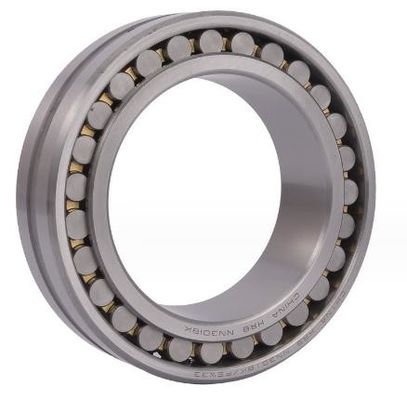
While ball bearings and tapered roller bearings often dominate discussions of automotive applications, cylindrical roller bearings play several vital and specific roles within modern vehicle drivetrains, particularly in manual and automatic transmissions. Their primary function in this context is to support intermediate shafts, countershafts, and gears where the loading is predominantly radial. Within a gearbox, shafts are subjected to high radial forces from the meshing action of gears as torque is transferred and ratios are changed. The high radial load capacity and compact cross-section of cylindrical roller bearings make them an efficient choice for supporting these shafts, contributing to the overall power density and compactness of modern transmissions.
One of the most critical and demanding applications is within the planetary gear sets of automatic transmissions. Planetary gear sets are compact, complex assemblies that provide multiple gear ratios. The cylindrical rollers in this setting are often used as needle rollers—a subtype with a very small diameter and high length-to-diameter ratio. They are employed in applications like the planet gears revolving on their pins. Here, the needle rollers provide a high-capacity, low-friction bearing surface that allows the planet gears to rotate smoothly on their stationary pins while transmitting tremendous torque. The space constraints within a planetary carrier are severe, and needle rollers offer the maximum load-carrying capacity in the minimal radial space available, a key enabler of the compact, multi-speed automatic transmissions found in today's vehicles.
The operating environment inside an automotive transmission is a unique blend of challenges: high rotational speeds, significant shock loads during gear shifts, and exposure to automatic transmission fluid (ATF) at varying temperatures. Maintenance, in the traditional sense, is largely non-existent for the end-user; transmission bearings are designed for the life of the vehicle. This places an immense burden on design-for-reliability and manufacturing quality. The bearings must be precision-made to ensure smooth, quiet operation and to handle the dynamic loads over hundreds of millions of cycles. The ATF serves as both lubricant and coolant, and its properties are carefully formulated to maintain adequate film strength under high pressure. Failure modes, when they occur, are often systemic—linked to lubrication breakdown from fluid degradation, contamination from clutch wear material, or excessive loads from aggressive driving. For transmission rebuilders, understanding the specific bearing configurations (e.g., whether a bearing is axially locating or free-floating) and using components that meet or exceed original equipment specifications is crucial for ensuring rebuilt units deliver performance and longevity.