December 15, 2025
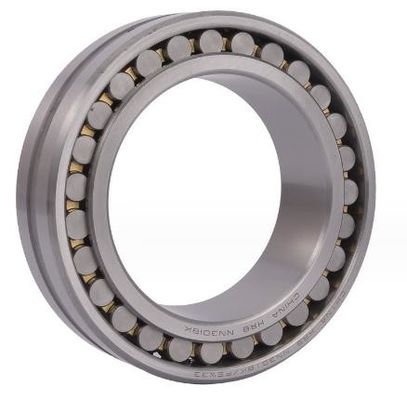
Electric motors and generators are the fundamental converters of electrical and mechanical energy, powering everything from industrial pumps to power station alternators. Within these machines, bearings play the critical role of supporting the rotating rotor while minimizing friction and maintaining a precise air gap between the rotor and stator. Cylindrical roller bearings are frequently employed in medium to large-sized motors and generators, particularly where the primary loading is radial. This is common in applications like large horizontal motors, where the rotor's weight is significant, or in generators driven by steam or gas turbines. The high radial load capacity of cylindrical roller bearings makes them ideal for supporting these heavy rotors reliably over long service intervals, ensuring smooth, efficient, and vibration-free rotation.
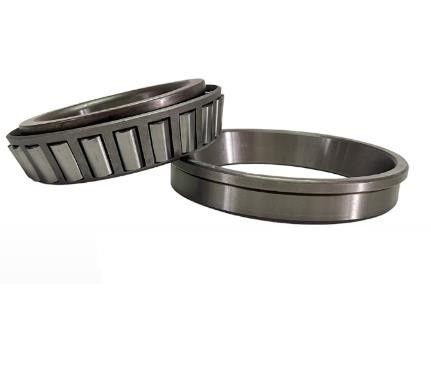
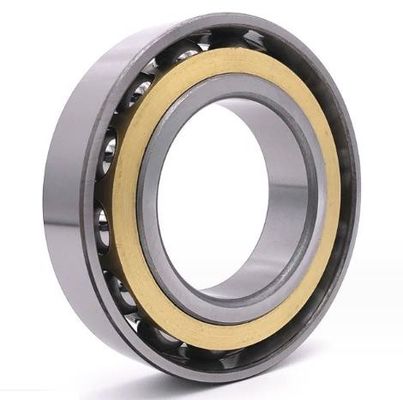
The choice and application of bearings in electric machines are influenced by several key operational factors. Speed is crucial; while cylindrical roller bearings are capable of high speeds, for very high-speed motors (e.g., spindle motors or turbo-compressors), angular contact ball bearings might be preferred. Load direction is another determinant; pure radial loads favor cylindrical rollers, whereas combined loads may necessitate tapered roller or deep groove ball bearings. A critical design consideration is managing thermal expansion. As the machine operates, the rotor shaft heats up and expands axially. A common bearing arrangement is the "locating/non-locating" configuration. Here, a bearing that can handle both radial and axial loads (like a deep groove ball bearing or a paired cylindrical roller bearing) is used at one end as the "locating" bearing to fix the axial position of the shaft. At the opposite "non-locating" end, an NU-type cylindrical roller bearing is used. This bearing supports the radial load but allows the shaft to expand freely within it, preventing destructive axial preload forces from building up.
Maintenance of bearings in electric machines focuses on ensuring continuous, reliable operation, often measured in years of uninterrupted service. Lubrication is the primary maintenance activity. For many industrial motors, grease-lubricated bearings are standard. The correct grease type, quantity, and relubrication interval—calculated based on bearing size, speed, and operating temperature—are vital. Over-greasing can be as harmful as under-greasing, causing churning and overheating. In large, high-speed, or critical machines, oil circulation lubrication with integrated cooling and filtration is employed. Condition monitoring is a standard practice. Vibration analysis is the most effective tool for detecting early-stage bearing faults like inner or outer race defects. Temperature monitoring at the bearing housing provides a secondary indication of problems. For critical assets, online monitoring systems provide real-time data, enabling a shift from time-based preventive maintenance to condition-based predictive maintenance, thereby preventing unexpected motor failures that can halt entire production lines or power generation processes.