December 15, 2025
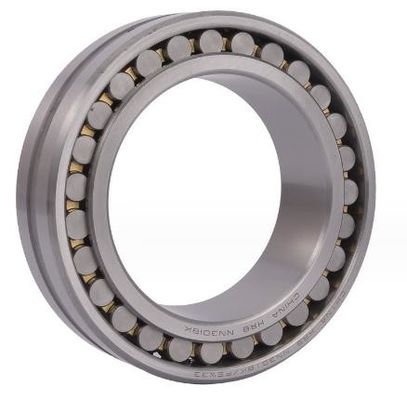
In the world of high-precision machining, where micron-level tolerances are the standard, the choice of bearing is a decisive factor. Cylindrical roller bearings, particularly in high-precision grades, are a cornerstone technology for machine tool spindle applications. Their primary role here is not merely to support the weight of the spindle but to provide absolute radial rigidity and rotational accuracy under high cutting forces. The high radial stiffness of these bearings minimizes deflection of the spindle shaft when subjected to the lateral forces of a milling cutter or grinding wheel. This rigidity is crucial for maintaining the precise position of the cutting tool relative to the workpiece, directly impacting the surface finish, dimensional accuracy, and geometric integrity of the machined part.
Machine tool spindles demand exceptional speed capability alongside rigidity, creating a challenging engineering balance. Modern cylindrical roller bearings for spindles are engineered to meet this challenge. They often feature rollers that are slightly crowned—meaning their profile is gently curved rather than perfectly straight. This crowning prevents stress concentration at the roller ends under conditions of slight misalignment or shaft deflection, reducing friction and heat generation at high rotational speeds. Furthermore, these bearings are manufactured to super-precision (P4, P2) or even ultra-precision tolerance classes. This involves incredibly tight controls on dimensions, raceway roundness, and surface finish to ensure minimal runout and vibration, which would otherwise translate into chatter marks on the workpiece. The cages are often made from lightweight, high-strength materials like phenolic resin or specially engineered polymers to reduce centrifugal forces at extreme speeds.
The harsh environment of a machine tool spindle—characterized by high speeds, fluctuating loads, and constant exposure to coolant and fine metal swarf—places extreme demands on bearing maintenance. Lubrication is typically a dedicated oil-air or oil-mist system that delivers a precise, clean, and cool flow of oil to the bearing interfaces. This system must be meticulously maintained; contaminated or degraded oil can quickly lead to abrasive wear and premature failure. Thermal management is also critical, as excessive heat can lead to thermal expansion and preload changes, degrading accuracy. Regular monitoring of spindle vibration and temperature is a standard predictive maintenance practice. Any deviation from baseline levels signals the need for inspection, often involving sophisticated analysis to distinguish between normal wear and incipient failure, ensuring that the high capital investment in precision machining centers is protected through optimal bearing performance and lifespan.