logo

Supporting the Giants: Bearings in Construction, Crane, and Heavy-Duty Vehicle Axles

December 15, 2025

Latest company news about Supporting the Giants: Bearings in Construction, Crane, and Heavy-Duty Vehicle Axles

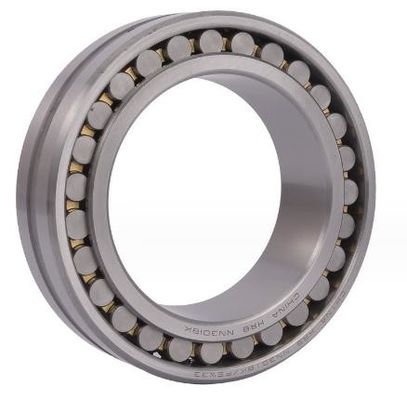
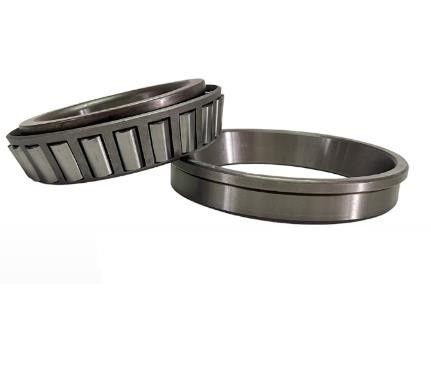
The realm of construction equipment, mobile cranes, and heavy-duty trucks is defined by immense static and dynamic loads. These machines must lift, move, and support colossal weights, often on uneven terrain. Their axles and wheels are the direct points of load transfer to the ground, and the bearings used here are subjected to some of the most severe service conditions in engineering. Tapered roller bearings are the traditional champion for wheel ends due to their ability to handle combined radial and thrust loads. However, cylindrical roller bearings find a crucial niche in specific axle designs, particularly as journal bearings for the straight, radial support of axle shafts within non-driving (dead) axles or as inner bearings in certain hub arrangements where the primary load is purely radial.

In many heavy-duty truck trailer axles and the non-driven axles of some construction vehicles, the wheel hub rotates around a fixed spindle or axle. Here, a pair of bearings is used. A large cylindrical roller bearing is often positioned at the inboard position, closest to the center of the vehicle. Its job is to carry the vast majority of the pure radial load from the vehicle's weight and payload. An outboard bearing (frequently a tapered roller bearing) then handles the remaining radial load and, importantly, all the axial (thrust) loads generated during cornering or on cambered roads. This configuration leverages the superior radial load capacity of the cylindrical roller bearing where it is most needed, optimizing the overall load-sharing and longevity of the hub assembly.

Maintenance in this sector is synonymous with safety and operational readiness. Bearing failures in a 40-ton crane or a fully loaded dump truck can have catastrophic consequences. Therefore, maintenance protocols are rigorous and often mandated by safety regulations. For wheel end bearings, the cornerstone is proper adjustment and lubrication. Bearings must be adjusted to have a specific amount of endplay or preload—a task requiring skill and precision. Too tight, and the bearing overheats; too loose, and it allows excessive movement, leading to impact damage. Lubrication is typically high-performance, high-temperature grease, applied in clean conditions to avoid contamination. Regular inspections for seal integrity, grease leakage, and hub temperature are standard practice. Operators and mechanics are trained to recognize early warning signs like unusual noise or wheel wobble. For construction equipment operating in mud and slurry, frequent cleaning and re-greasing of exposed bearing surfaces (like those in idler wheels for tracked vehicles) are essential to purge contaminants. This disciplined, proactive maintenance culture is what allows cylindrical roller bearings and their counterparts to reliably support the giants of industry under the most demanding conditions imaginable.

Get in touch with us
Contact Person : Mrs. Judy Wang
Tel : 86-18312484858
Characters Remaining(20/3000)