December 15, 2025
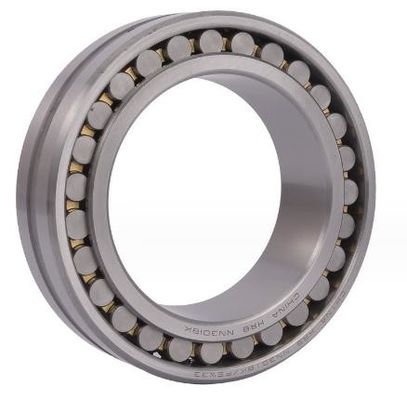
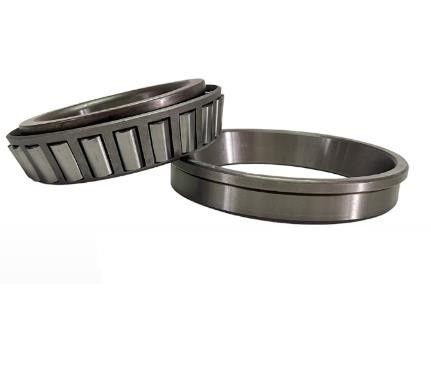
Cylindrical roller bearings are the unsung heroes of heavy machinery and industrial applications, designed to shoulder immense radial loads with precision and reliability. Unlike their ball bearing counterparts, these bearings feature cylindrical rollers as the rolling elements, which have a greater line contact with the raceways. This fundamental design difference is the source of their primary strength: an exceptionally high radial load capacity and moderate to high speed capability. Their simple, robust construction—typically consisting of an inner ring, an outer ring, a cylindrical roller set, and a cage to retain the rollers—makes them a preferred choice where brute strength and durability are paramount. From the massive rolling mills in steel plants to the powerful gearboxes of wind turbines, cylindrical roller bearings provide the sturdy backbone that allows heavy-duty equipment to operate under punishing conditions.
The versatility of this bearing type is significantly enhanced by its various design configurations. The most common distinction lies in the presence or absence of flanges (or ribs) on the rings. For instance, the NU and N types have no ribs on the inner or outer ring, allowing them to accommodate axial displacement of the shaft relative to the housing, making them ideal as "free-end" bearings in applications with thermal expansion. In contrast, NJ and NF types have a single fixed rib on one ring, enabling them to handle limited unidirectional axial loads in addition to radial loads. For applications requiring even greater axial guidance, NUP or NH types provide two-point axial location. This modularity allows engineers to select the exact bearing configuration to match the specific load and movement requirements of the machine, optimizing performance and service life.
The performance and longevity of a cylindrical roller bearing are critically dependent on proper selection, installation, and maintenance. Selection involves not just matching the bore and outside diameter, but also carefully calculating the dynamic and static load ratings against the application's actual loads, speeds, and desired lifespan. Installation requires meticulous attention to achieve the correct fit (often an interference fit on the rotating ring) and alignment; even minor misalignment can cause edge loading, leading to premature failure through spalling or wear. Lubrication is another cornerstone of maintenance. Whether using grease or oil, the lubricant must form a protective film to separate the rolling surfaces, dissipate heat, and prevent corrosion. Regular condition monitoring through vibration analysis or temperature checks is essential for predictive maintenance, allowing for intervention before a catastrophic failure occurs, thereby minimizing downtime and repair costs in critical industrial operations.